
Short Answer
Your garage door is almost certainly the largest opening in your home's exterior walls, and if it's not built or maintained to handle wind load, it's the most likely point of failure in a serious storm. A door that buckles or blows in lets wind pressure rush into the garage with nowhere to go but up, which is how roofs get lifted off homes that otherwise would have ridden out the storm fine. Checking and reinforcing your garage door now, while storms are still forming out in the Gulf, is one of the highest-value things you can do before the season finally winds down in late fall.
Why the Garage Door Is the Weak Wall
Every other wall in a typical home is a solid, continuous surface. The garage door is a large panel made of thinner material, hung on tracks, held in place by springs and rollers rather than studs and framing. Under normal conditions that's fine. Under hurricane-force wind, it's a different story.
When wind hits a closed house, pressure builds on the windward side and drops on the leeward side. If the garage door fails and wind gets inside, the pressure inside the structure suddenly spikes. That internal pressure pushes outward on the roof and walls from the inside, which is far more destructive than wind simply blowing against the outside of a sealed building. This is why building codes in wind-prone parts of Florida treat garage doors as structural, not just functional.
Signs Your Door Won't Hold Up
A door that looks fine day-to-day can still be a liability in high wind. Walk around yours and check for:
- Rust at the bottom corners or along the track, which is common near the coast where salt air accelerates corrosion and weakens metal faster than inland homes experience.
- Swollen or warped panels, especially on older wood or composite doors that have absorbed humidity over the years — swelling can keep the door from seating properly even when closed.
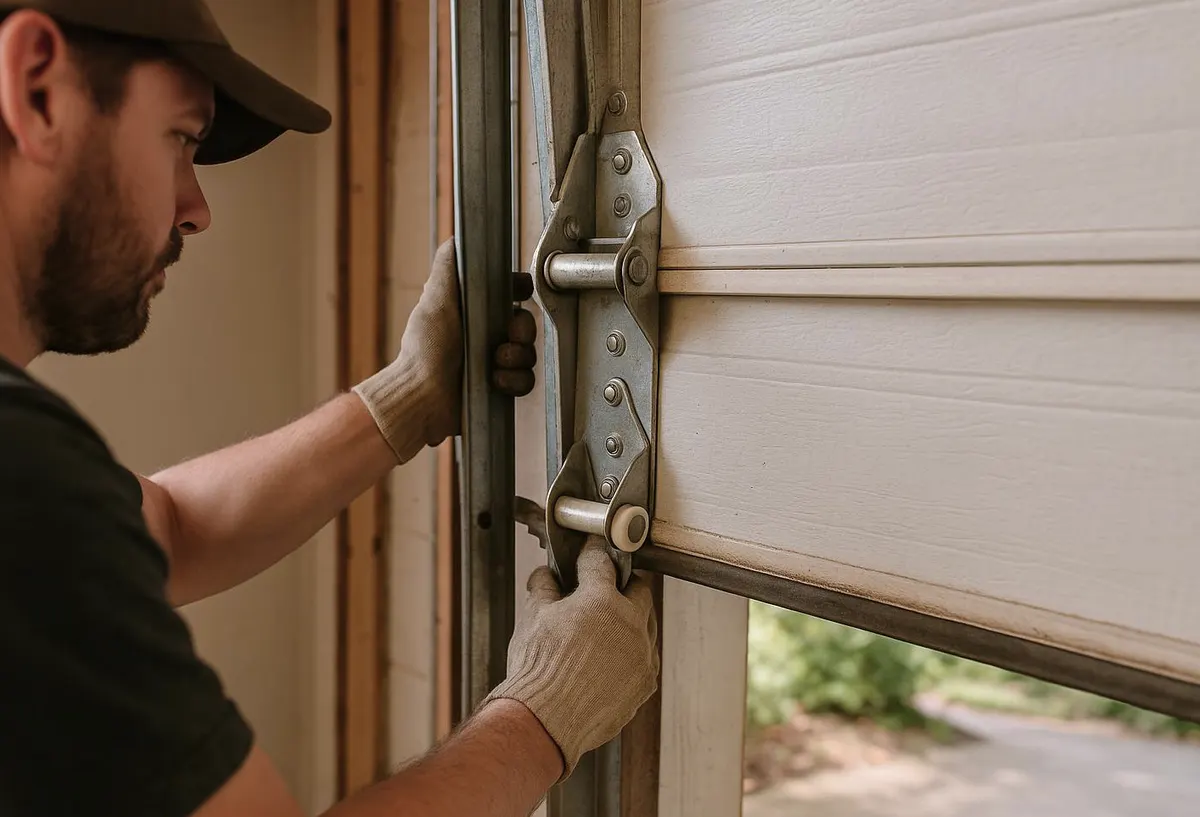
- Loose or bent track brackets, which let the door rack side-to-side under pressure instead of staying rigid.
- Worn rollers or a stretched opener chain, which add play to a system that needs to be tight to resist wind-driven flexing.
- No horizontal bracing on the back of the panels, which many standard residential doors lack unless they were specifically rated for wind load.
Any one of these on its own might just be a maintenance issue. Combined, they add up to a door that can fail well below the wind speeds it was originally rated for, assuming it was rated for wind load at all.
Getting the Door Ready Before the Next System Forms
You don't need to wait for a named storm to start preparing. A few steps now make a real difference:
- Lubricate and inspect moving parts. Rollers, hinges, and tracks should move smoothly with no grinding or sticking — resistance usually means corrosion or a part nearing failure.
- Check spring tension. A door with a weakening spring will sag unevenly or feel heavy when opened manually. Under wind load, an unbalanced door stresses the track and opener far more than a properly tensioned one.
- Tighten all hardware. Humidity and daily thermal cycling loosen bolts and brackets over time; a quick pass with a wrench on track brackets and hinges catches most of it.
- Add or verify bracing. If your door doesn't have horizontal wind bracing on the interior side, a retrofit kit can be installed, or it may be worth discussing a wind-rated replacement door if yours is original to an older build.
- Replace worn weatherstripping. It won't stop wind load, but it does stop wind-driven rain from forcing its way around the edges during the heavy afternoon downpours and storm bands that are still common through the fall.
When an actual storm is approaching, close the door, unplug the opener so it can't be triggered remotely, and engage the manual lock if your door has one. A door that's locked down mechanically is far less likely to be forced open by pressure alone.
When to Call Everglades City Garage Door Pro
If you've spotted rust, sag, or play in the track during your walk-around, or you're not sure your current door has any wind bracing at all, that's worth a professional look before storm activity picks up again. Our Garage Door Tune-Up & Maintenance service covers exactly this kind of inspection — springs, tracks, rollers, and hardware — and catches small issues while they're still cheap to fix. If a spring is already weak or a panel is damaged, our Garage Door Spring Repair and Garage Door Panel Replacement services get the door back to full strength rather than leaving a compromised point on the house.
If you're in Everglades City, Chokoloskee, Ochopee, Copeland, Jerome, Goodland, Marco Island, or Naples and want your garage door checked before the next storm rolls in off the Gulf, call Everglades City Garage Door Pro today and we'll get a technician out to take a look.